Benign Tumors
Benign bone tumors are non-cancerous growths that develop within or around the bone. Although they do not spread to other parts of the body, some benign tumors can grow, weaken the bone, cause pain, swelling, or increase the risk of fracture.
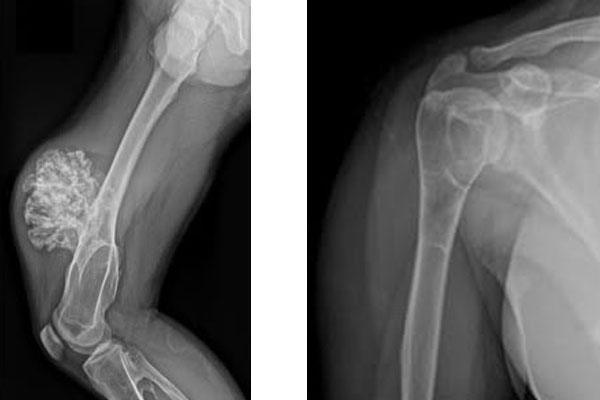
Understanding
Benign Bone Tumors
- Benign bone tumors are non-cancerous growths that may develop in different bones and at different stages of life.
- Common types include osteochondroma, enchondroma, chondroblastoma, giant cell tumor and other benign bone lesions.
- Some tumors may remain stable without causing symptoms, while others can cause pain, swelling, restricted movement or a pathological fracture.
- Accurate diagnosis is important to distinguish benign tumors from aggressive or malignant bone tumors.
Diagnosis
Evaluation of Benign Bone Tumors
- Clinical examination and assessment of symptoms help determine the nature and location of the lesion.
- X-rays are commonly used as the first imaging investigation to evaluate the bone lesion.
- MRI or CT scans may be recommended to assess the extent of the tumor and its relationship with surrounding structures.
- In selected cases, a biopsy may be required to establish a definitive diagnosis before treatment.
Treatment
Treatment depends on the type, size, location and behaviour of the tumor, as well as the patient's symptoms. Small and stable lesions may only require regular clinical and imaging follow-up. Symptomatic, enlarging or locally aggressive tumors may require surgical treatment such as curettage, excision or wide resection. When necessary, bone grafting, reconstruction or other procedures may be used to restore bone strength and function.