Pathological Fracture Fixation
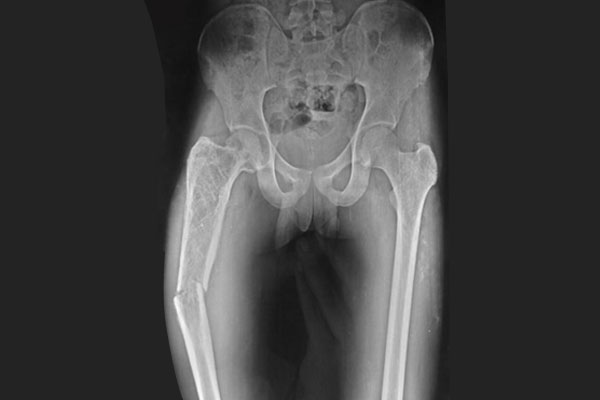
Pathological fractures occur when a bone breaks in an area weakened by an underlying disease or lesion. Fixation helps stabilize the affected bone, relieve pain, and restore function.
Understanding
What is a Pathological Fracture?
- Fracture occurring in a bone weakened by an underlying disease or lesion.
- Commonly associated with bone tumours, metastasis, cysts, or other bone-weakening conditions.
- May occur after minimal trauma or even during normal daily activities.
- Early stabilization can help reduce pain and improve mobility.
Diagnosis
Evaluation
- Clinical examination to assess pain, swelling, deformity, and functional limitation.
- X-rays to identify the fracture and underlying bone abnormality.
- CT or MRI may be recommended for detailed assessment of the bone and surrounding tissues.
- Additional blood tests or biopsy may be required to determine the underlying cause.
Treatment
Pathological fracture fixation involves stabilizing the weakened bone using appropriate surgical techniques such as plates, screws, nails, or other fixation implants. Treatment is planned according to the location and severity of the fracture, the underlying condition, and the patient's overall health. The goal is to provide pain relief, restore stability, and support early functional recovery.