Revision Knee & Hip Surgery
Revision knee and hip surgery is a complex procedure performed to address problems with a previous joint replacement. It may be required because of implant loosening, wear, infection, instability, bone loss, fracture or recurrent pain. Careful assessment and detailed planning are essential to restore joint stability, function and mobility.
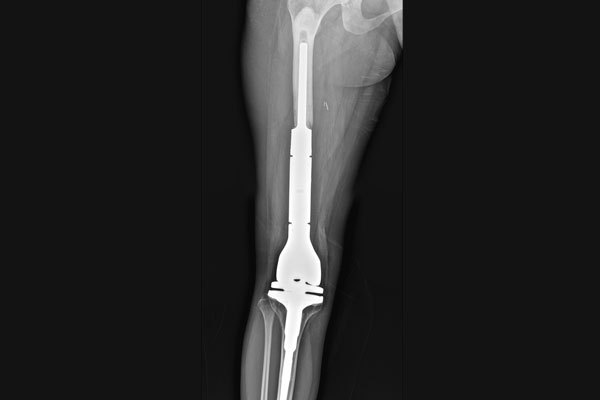
Understanding
Revision Joint Replacement
- Revision surgery involves evaluating and, when necessary, replacing or modifying components of a previous knee or hip replacement.
- Common reasons include implant loosening, infection, instability, wear, bone loss, periprosthetic fracture or persistent pain.
- Previous surgeries can result in bone loss and altered anatomy, making revision procedures more technically demanding than primary joint replacement.
- Detailed assessment helps determine the condition of the implant, surrounding bone and soft tissues before surgery.
Diagnosis
Evaluation Before Revision Surgery
- Clinical examination and review of previous surgical records help identify the cause of symptoms and assess joint function.
- X-rays and, when required, CT scans provide information about implant position, fixation and bone loss.
- Blood tests and joint fluid analysis may be performed when infection around the implant is suspected.
- Detailed pre-operative planning helps determine the appropriate implants, reconstruction techniques and surgical approach.
Treatment
Revision knee or hip surgery is tailored to the underlying problem and the condition of the joint. Treatment may involve removal and replacement of loose or damaged implants, treatment of infection, management of bone loss and reconstruction of deficient bone or soft tissues. Specialized revision implants, bone grafts or other reconstructive techniques may be required in complex cases. The goal is to achieve a stable, functional joint while addressing the underlying cause of failure.